

10 Types of Blog Posts Every Local Business Can Use
Local businesses do not need an endless supply of original ideas to maintain a useful blog. They need a small collection of dependable formats that can turn everyday customer questions, decisions, and problems into clear articles.
The best local business blog post types are flexible enough to reuse across different services and seasons. A plumber can explain a warning sign. A remodeler can compare materials. A landscaper can publish a seasonal checklist. A retailer can create a buying guide. The subject changes, but the underlying format remains useful.
That distinction makes content planning much easier. Instead of asking, “What completely new idea can we invent this month?” you can ask, “Which proven format best fits the question our customers are asking now?”
A topic tells you what to discuss; a format tells you how
A topic might be “replacement windows,” “spring lawn care,” or “choosing a payroll provider.” A format turns that subject into a specific promise for the reader.
For example, one replacement-window topic could become:
- an answer to a common question;
- a comparison of two materials;
- a checklist for preparing the home;
- a cost explainer; or
- a guide to common mistakes.
Each article serves a different reader need, even though the business expertise behind it is related.
If you need help identifying subjects first, start with our collection of 21 useful small business blog post ideas. Then use the formats below to turn those subjects into focused articles.
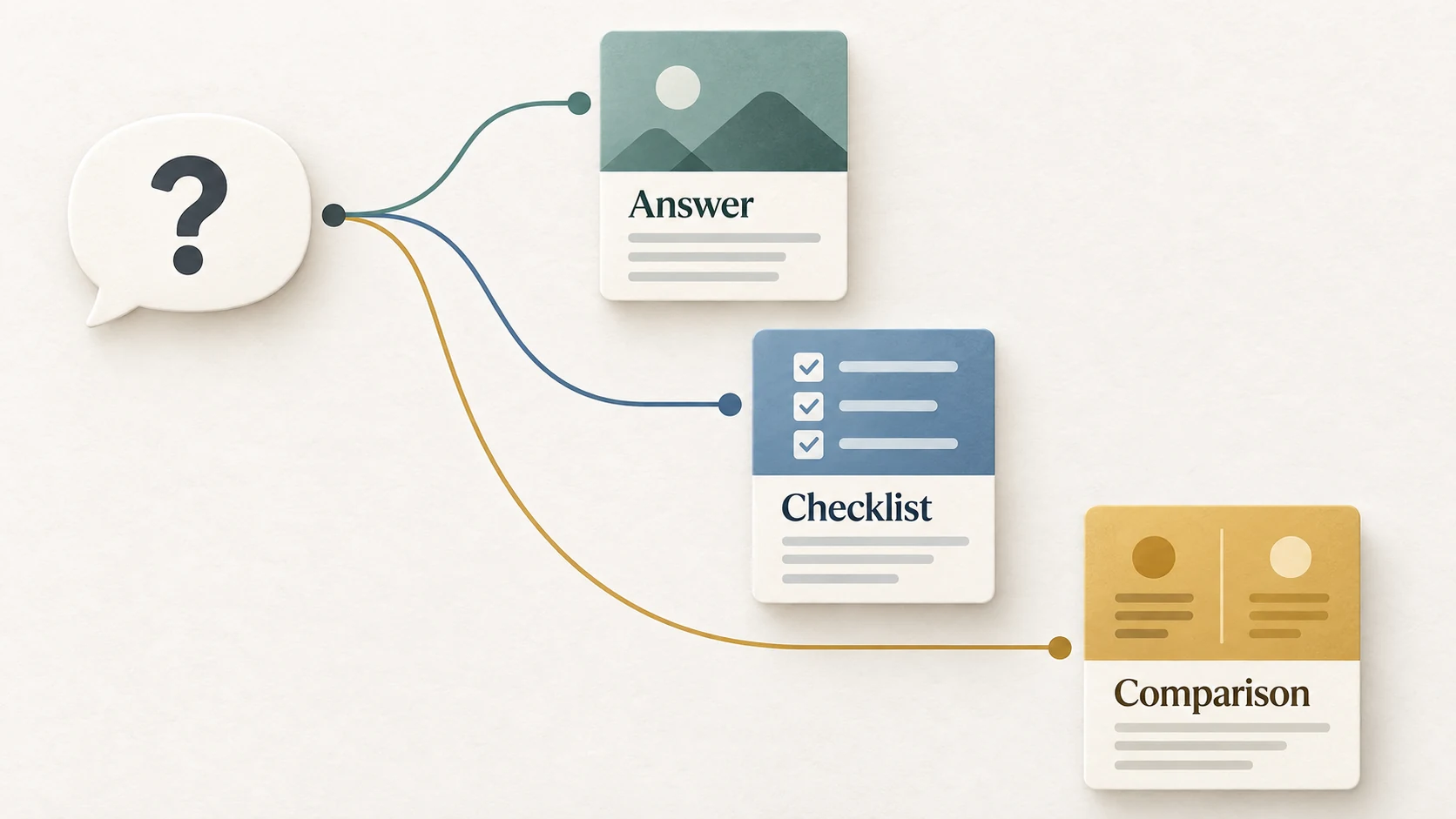
1. Answers to common customer questions
Begin with the questions your staff hears repeatedly on calls, in email, at the counter, or during estimates.
A strong question-and-answer post focuses on one question and gives the reader a direct response near the beginning. It can then explain the conditions, exceptions, or next steps that make the answer useful.
Examples include:
- How often should a furnace be serviced?
- Can exterior paint be applied in cool weather?
- How long does a typical bathroom remodel take?
- What should I bring to my first consultation?
These articles are practical because the source material already exists inside the business. If several customers ask the same question, other people are probably wondering about it too.
Avoid burying a straightforward answer beneath a long introduction. Give readers the information they came for, then add the professional context that helps them use it correctly.
2. How-to and process posts
A how-to article helps readers complete an appropriate task. A process article explains what the business does and what the customer should expect.
The difference matters. A garden center might teach readers how to prepare a raised bed. A roofing company should not encourage an untrained homeowner to perform dangerous roof repairs, but it can explain how a professional inspection works.
Useful process topics include:
- how to prepare a room before painters arrive;
- what happens during an initial property assessment;
- how a custom order moves from measurement to installation; or
- how to gather information before a tax-preparation appointment.
Use numbered steps when sequence matters. Include tools, preparation, timing, or safety boundaries when they help the reader. The goal is not to reveal every internal procedure. It is to reduce uncertainty and help the customer feel prepared.
3. Cost and pricing explainers
Price is one of the most common questions in local service businesses, yet many companies avoid discussing it unless they can quote one exact number.
A useful cost article does not need to promise a universal price. It can explain:
- what is normally included;
- which choices affect the total;
- why two apparently similar projects may cost different amounts;
- which information is needed for an accurate estimate; and
- where unusually low quotes may exclude important work.
For example, a flooring company could explain how room size, subfloor condition, material, removal, and installation details affect the project. A bookkeeping service could explain how transaction volume, cleanup work, reporting needs, and payroll influence its fee.
Be transparent about what the article can and cannot estimate. Readers are usually not demanding a binding quote from a blog post. They want enough information to understand the decision and avoid surprises.
4. Comparison and decision posts
Customers often reach a point where they understand the basic options but do not know which one fits their situation.
A comparison post can help them evaluate two materials, services, approaches, or product categories without turning the article into a winner-versus-loser contest.
Useful comparison structures include:
- option A versus option B;
- repair versus replacement;
- basic service versus comprehensive service;
- short-term savings versus long-term maintenance; or
- professional service versus a reasonable do-it-yourself approach.
Compare the options using consistent factors such as cost, durability, upkeep, appearance, convenience, or ideal use. Explain who may prefer each choice.
Balanced comparisons build more trust than articles designed to force every reader toward the most expensive option. A good comparison helps the customer recognize the conditions under which a recommendation makes sense.
5. Checklists and planning guides
Checklists turn a complicated activity into a manageable sequence. They are especially useful before an appointment, purchase, project, season, or event.
A local business could publish:
- a moving-day preparation checklist;
- a pre-remodel planning checklist;
- a seasonal equipment-maintenance list;
- questions to ask before hiring a service provider; or
- documents to gather before a business consultation.
Keep the checklist specific enough to use. “Plan ahead” is vague. “Move fragile items away from the work area” gives the reader a clear action.
A downloadable version may add value when readers will use the list away from the website. The article should still contain enough information to be useful without requiring the download.
6. Problem, warning-sign, and troubleshooting posts
Customers frequently notice a symptom before they understand the underlying problem. They may see peeling paint, hear an unusual sound, find uneven cooling, or notice that a process is taking longer than expected.
A warning-sign article helps readers recognize what deserves attention. A troubleshooting article walks through safe, basic checks and explains when professional help may be appropriate.
Good examples include:
- signs that a deck needs more than cosmetic maintenance;
- reasons a room may feel colder than the rest of the house;
- common causes of cloudy display-case glass; or
- why an online order may not be ready when expected.
Do not use fear to make ordinary issues sound like emergencies. Separate minor concerns from urgent ones, and do not encourage readers to attempt work that requires specialized training or creates a safety risk.
7. Mistakes and myths posts
Some of the most helpful articles begin with an assumption customers regularly bring into a conversation.
A mistakes post can show readers what to avoid before they spend money or lose time. A myth-versus-fact post can correct outdated or oversimplified advice.
Potential angles include:
- five mistakes people make when comparing contractor estimates;
- common misconceptions about maintaining hardwood floors;
- why the cheapest material is not always the least expensive choice; or
- three assumptions that delay a successful project.
Use a respectful tone. The reader should feel better equipped, not embarrassed for believing something common. Explain why the misunderstanding exists and replace it with a practical alternative.
8. Local and seasonal guides
Local businesses can add context that a national article cannot. Weather, housing styles, regulations, event calendars, travel patterns, and seasonal demand can all affect what customers need.
A local or seasonal post might cover:
- preparing an older home for a Western New York winter;
- choosing plants for a short growing season;
- planning maintenance before a region’s busiest rental period;
- shopping locally for an upcoming community event; or
- scheduling outdoor work around typical seasonal conditions.
Use local references only when they genuinely change the advice. Adding a city name to a generic article does not make it locally useful.
Review seasonal posts before sharing them again. Dates, regulations, availability, and recommendations can change, even when the general subject remains relevant.
9. Customer stories and project case studies
A case study shows how a real problem was approached. It can help readers see the process, tradeoffs, and outcome in a concrete situation.
A simple structure is:
- the customer’s starting situation;
- the goal or constraint;
- the options considered;
- the work completed; and
- the result and lessons.
The most useful stories include more than a glowing quote. They explain the reasoning behind the work and identify what another customer can learn from it.
Obtain appropriate permission before identifying a customer, property, or private business information. Keep testimonials accurate and representative. The Federal Trade Commission’s endorsement guidance emphasizes that endorsements should be honest and not misleading and that relevant connections should be disclosed.
When a customer should remain private, use an anonymized example or create a general process article instead.
10. Behind-the-scenes and expertise posts
Customers usually see the finished product, not the decisions and standards behind it. A behind-the-scenes article can make that invisible work understandable.
Topics might include:
- how materials are selected;
- what the team checks before declaring a job complete;
- how employees maintain professional skills;
- why the business follows a particular quality-control step; or
- how a local product is prepared, packaged, or delivered.
Focus on details that matter to customers. A tour of the break room may be personal, but it does not explain the value of the service. A look at the inspection checklist, material standards, or preparation process demonstrates expertise without making an unsupported claim.
Behind-the-scenes content works best when it answers the reader’s unspoken question: “Why should I feel confident choosing this business?”
How to choose the right format for your next article
Start with a real source of customer information rather than a blank document.
Review:
- questions from calls and contact forms;
- notes from estimates or consultations;
- objections that delay decisions;
- steps customers often misunderstand;
- seasonal tasks and reminders;
- service-page topics that need more explanation; and
- feedback from employees who interact with customers.
The U.S. Small Business Administration’s market-research guidance recommends gathering information about customers and alternatives in the market. The same principle can improve a blog plan: learn what people need before deciding what to publish.
Then match the need to the format:
- The customer wants a direct fact: write a question-and-answer post.
- The customer feels uncertain about the experience: explain the process.
- The customer is comparing choices: create a balanced comparison.
- The customer needs to prepare: provide a checklist.
- The customer has noticed a symptom: explain warning signs or safe troubleshooting.
- The customer doubts the value: show the standards or reasoning behind the work.
One question can sometimes support more than one article, but each post should have a distinct purpose. Do not publish several pages that repeat the same answer with slightly different titles.
Turn the 10 formats into a sustainable rotation
You do not need to use every format each month. Choose a publishing pace the business can maintain, then rotate formats according to customer needs.
A simple sequence might be:
- answer a frequent question;
- explain a process;
- publish a comparison;
- provide a checklist;
- address a seasonal need; and
- share a project lesson or behind-the-scenes standard.
After six posts, review what readers used, what employees shared with customers, and which questions continue to appear. Then begin another rotation with new subjects.
Our guide to how often a small business should publish blog posts can help you select a realistic schedule. Remember that business blogging takes time to develop, so judge the usefulness of the growing library rather than expecting one format to create an overnight result.
Useful local content begins with real business knowledge
Formats make planning easier, but they do not replace expertise. The useful details still come from the people who answer calls, perform the work, solve problems, and understand local customers.
Google’s people-first content guidance recommends creating helpful, reliable information for people rather than content produced primarily to manipulate search rankings. That is a strong standard for a local business blog: answer a real need, use genuine experience, and make the next step clear.
The 10 formats in this guide provide the structure. Your customer conversations provide the substance. Together, they can support a focused content library without forcing the business to invent a new strategy every time it needs an article.
If maintaining that system keeps slipping behind daily responsibilities, see what a blog management service includes or contact Managed Authority Blog to discuss a practical publishing plan.